

Warehouse Automation Australia | Everything You Need to Know
The industrial landscape in Australia is currently navigating a period of significant structural change. As land values in metropolitan freight corridors rise and labour availability fluctuates, the traditional manual warehouse model is becoming increasingly difficult to sustain. To remain competitive, many organisations are turning to warehouse automation Australia to drive throughput and operational precision.
What is Warehouse Automation?
When asking what warehouse automation is, it is essential to look beyond simple mechanisation. It involves the integration of technology to handle the movement, storage, and retrieval of inventory with minimal human intervention.
In the current Australian industrial context, this transition is increasingly defined by AI warehouse automation and digital twinning. These systems use real-time data to coordinate complex fleets of equipment, ensuring that the movement of goods is optimised based on current demand rather than static schedules.
Levels of Warehouse Automation
Automation is not a binary state; it exists on a spectrum of technological complexity:
- Basic Warehouse Automation: Focused on automating simple, repetitive tasks using tools like basic conveyors or data entry scanners.
- Warehouse Management System (WMS) Automation: Utilises software to coordinate warehouse logic, track stock levels in real-time, and assign tasks to personnel more efficiently.
- Mechanised Warehouse Automation: The introduction of physical machinery, such as sorters and carousels, to assist human operators in moving goods.
- AI-Driven Warehouse Automation: The most advanced level, where robotic warehouse automation and AI work in tandem to make autonomous decisions regarding routing, replenishment, and task prioritisation.
Key Benefits of Warehouse Automation
Implementing a warehouse automation strategy provides several measurable improvements to the bottom line and operational health.
Enhanced Throughput and Operational Continuity
Unlike manual workflows, automated systems can operate 24/7 without performance degradation. This operational continuity is vital in the Australian market, where e-commerce expectations demand rapid turnaround times. By maintaining a consistent rhythm of movement, facilities can process higher volumes of orders per hour, effectively increasing the capacity of the existing site without expanding the building’s physical footprint.
Precision and Error Mitigation
Human error in picking and packing is a high hidden cost, leading to returns, re-shipping, and customer dissatisfaction. AI warehouse automation reduces this risk by ensuring that the correct SKU is retrieved and sorted every time. This precision extends to inventory management, where real-time tracking provides an accurate picture of stock levels, reducing the likelihood of overstocking or stockouts.
Improved Workplace Health and Safety (WH&S)
In Australia, stringent safety regulations require businesses to minimise physical risks to employees. Automation takes over high-risk tasks, such as heavy lifting, working at heights, or operating in temperature-controlled environments like cold storage. By removing personnel from these hazardous areas, companies significantly lower the risk of workplace injuries and associated insurance premiums.
Resource and Energy Efficiency
Automated warehouses often require less lighting and climate control than those populated by a large manual workforce. Furthermore, high-density systems like ASRS allow for much tighter storage configurations. This efficient use of space and resources contributes to a more sustainable operation, lowering the energy consumption per unit stored.
Key Considerations When Implementing Warehouse Automation
While the transition to automation is beneficial, it requires a clear-eyed assessment of the challenges involved.
Upfront Capital Expenditure and ROI
The initial investment for robotic warehouse automation is substantial. Beyond the cost of the hardware, businesses must factor in software integration and site preparation. It is essential to look at the long-term Return on Investment (ROI). While the upfront costs are high, the reduction in long-term labour costs and the avoidance of expensive land acquisition often justify the expenditure over a five-to-ten-year horizon.
Integration with Legacy Architecture
One of the most complex phases of automation is ensuring new technology communicates with existing Warehouse Management Systems (WMS) or Enterprise Resource Planning (ERP) software. Incompatible data flows can lead to operational bottlenecks. A successful implementation requires a robust digital framework where hardware and software are perfectly synchronised to avoid data silos.
Workforce Transition and Training
The shift to automation does not necessarily mean a reduction in staff, but it does require a change in skill sets. Personnel must be retrained to oversee, maintain, and troubleshoot the new systems. Managing this cultural and technical transition is vital to ensure that the workforce feels supported and that the technology is utilised to its full potential.
Maintenance and System Reliability
Occasional technology failures are inevitable. Because an automated warehouse is a tightly integrated system, a failure in one area can potentially stall the entire operation. This necessitates a proactive maintenance schedule and a partnership with a reliable warehouse automation specialist who can provide rapid technical support and spare parts to minimise downtime.
Is Warehouse Automation Right for Your Business?
The decision to automate typically hinges on the volume and complexity of your operations. If your facility is facing rising labour costs, reaching the limits of its storage capacity, or struggling with picking accuracy, automation is a logical step. Warehouse automation is a strategic investment for businesses with long-term plans to scale, providing the stability and predictability needed to manage growth in a volatile market.
Dexion as Your Warehouse Automation Specialist
Dexion provides engineered solutions that address the specific logistical pressures of the Australian market. As a dedicated warehouse automation specialist, Dexion focuses on high-performance hardware designed for longevity and modularity.
MDS ASRS (Multi-Directional Shuttle)
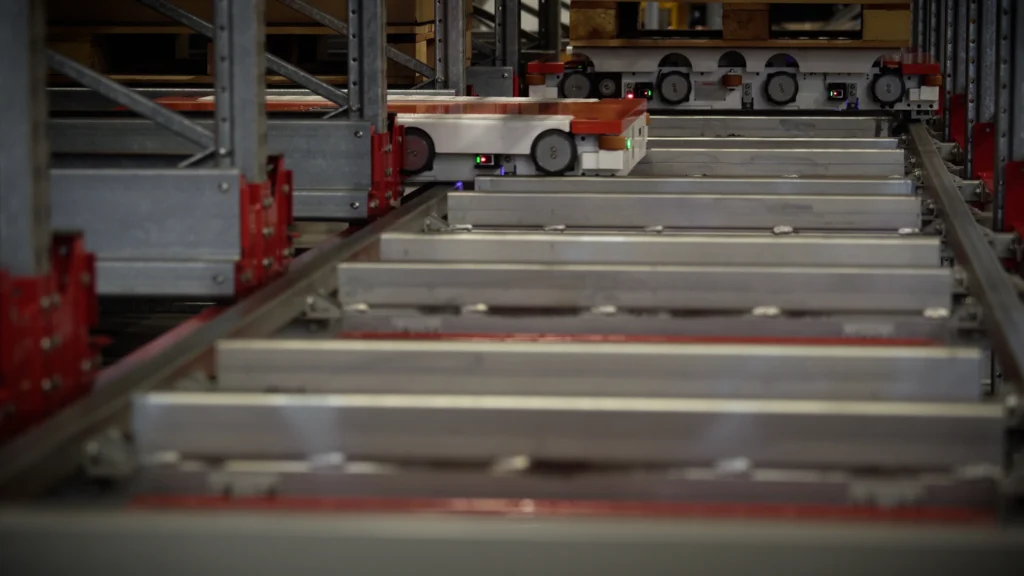
The MDS ASRS is a sophisticated solution for high-density pallet storage. Unlike standard shuttles that move on a single axis, this autonomous multi-directional system can navigate throughout a condensed racking framework. This allows for rapid access to any pallet location without the need for multiple access aisles, making it ideal for facilities with high SKU counts and limited floor space.
Smart Roller Conveyors
Material handling is optimised through Smart Roller Conveyors, which incorporate intelligent logic directly into the hardware. These conveyors feature zero-pressure accumulation, ensuring that products move smoothly without colliding. They also allow for integrated tracking and sorting, allowing inventory to flow seamlessly from the storage zone to the dispatch dock with zero manual intervention.
ASRS Racking for Pallets
Dexion’s ASRS warehouse automation systems are built on high-bay racking frameworks that can reach heights far exceeding traditional pallet racking. These structures are engineered to handle the dynamic loads of high-speed cranes, providing a stable foundation for dense vertical storage.
Frequently Asked Questions About Warehouse Automation
1. What is Warehouse Automation?
It is the use of technology—ranging from software and sensors to robotics—to automate repetitive warehouse tasks and inventory movement.
2. Why is Warehouse Automation Important in Australia?
High labour costs and the need for 24/7 productivity in the e-commerce sector make automation essential for maintaining a competitive edge.
3. What Types of Automation Are Available for Warehouses in Australia?
Warehouse automation solutions in Australia range from MDS ASRS, Smart Roller Conveyors, and ASRS Racking.
4. What Industries in Australia Benefit Most From Warehouse Automation?
Retail, 3PL, food and beverage, and pharmaceuticals see the most immediate benefits due to high volume and accuracy requirements.
5. How Do I Know If My Warehouse is Ready for Automation?
If you are reaching maximum capacity, facing labour shortages, or have high error rates, it is time to evaluate your facility’s automation potential.
Conclusion
Transitioning to an automated model is a significant undertaking, but it is the most effective way to future-proof a logistics operation. By choosing a partner with the right technical expertise, Australian businesses can transform their warehouses into high-performance hubs. Contact Dexion to get a one-to-one consultation today about your facility requirements and bespoke automation needs.
