A bustling warehouse is an environment of constant motion. With forklifts navigating tight aisles and high-volume inventory moving continuously, structural vulnerabilities can develop silently.
Racking damage isn’t always obvious. A minor forklift bump might appear superficial at a glance, but the cumulative effect of unaddressed impacts can compromise the integrity of an entire storage system. Implementing regular inspections and proactive maintenance is the definitive approach to keeping your facility safe, compliant, and operational.
Why Are Racking Inspections Crucial for Warehouses?
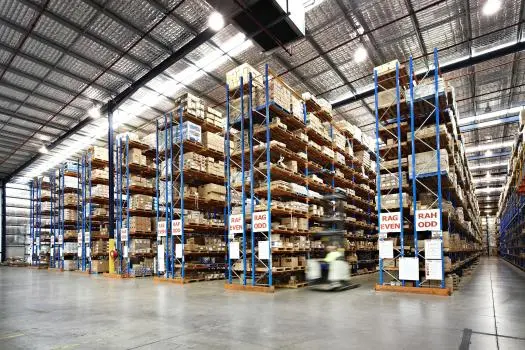
Operating an industrial facility requires a rigorous focus on risk management. Maintaining storage integrity is a core component of this responsibility, driven by several critical operational factors:
Regulatory Compliance
Under Work Health and Safety (WHS) laws, warehouse operators bear a strict duty of care to provide a safe working environment. Meeting local standards and manufacturer guidelines is a legal necessity. In Australia, this means absolute adherence to the design and operational mandate AS 4084 (specifically AS 4084.2:2023 Steel storage racking – Operation and maintenance). Under these guidelines, pallet racking systems should undergo inspections at least once every 12 months to maintain their certified rating.
Risk Mitigation
Metal fatigue and structural shifts build up progressively. Catching small distortions through a formal racking inspection allows for targeted remediation before localised stress transforms into an abrupt, systemic structural failure.
Injury Prevention
Deteriorated racking structures pose an immediate safety risk for personnel working within the aisles. Routine checks ensure that columns, beams, and connections remain physically capable of supporting thousands of kilograms above your team’s heads.
Inventory Protection
Structural oversight ensures inventory remains well-protected and shielded from costly damage caused by sudden shelf collapses or falling pallets.
Downtime Prevention
A major racking incident halts operations entirely, often requiring weeks of forensic investigation, debris clearance, and emergency reconstruction. Routine maintenance prevents long periods of downtime after an incident, keeping throughput predictable.
Dexion’s Pallet Inspection Checklist
To assist your floor managers and safety officers in identifying structural vulnerabilities, we utilise a comprehensive structural framework during safety audits. This ground-level pallet racking inspection checklist highlights the key elements requiring consistent monitoring.
Incident Reporting and Pallet Integrity
- Checking the Incident Log: Safety compliance begins with accountability. Every forklift strike, no matter how minor, must be recorded immediately in a centralised maintenance log. This ensures that areas subjected to sudden kinetic impact are flagged for immediate engineering evaluation.
- Pallet Suitability: Storage systems are engineered for specific load footprints. Part of a thorough pallet racking safety inspection involves identifying and removing unsuitable pallets that create uneven load concentrations or lack appropriate structural support. Pallet Placement and Quality: Racking longevity relies on correct load distribution. Operators must verify whether pallets are positioned correctly on the load-bearing beams, ensuring they have appropriate front and back boards to secure placement, and immediately flag any pallets showing splits, rot, or structural cracking.
Frames, Baseplates, and Anchoring
- Upright and Bracing Damage: Inspecting for low-height front-or-rear impact damage is vital, as this remains the most common forklift impact zone. Even slight deviations undermine load capacity.
- Anchoring: Floor stability prevents system twisting. Inspectors must verify that baseplates are securely anchored to the concrete slab with floor bolts intact, correctly tensioned, and free of shear damage.
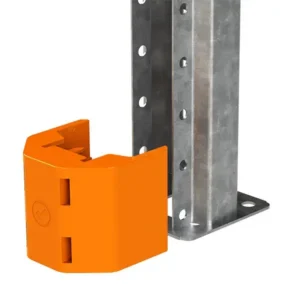
- Levelling and Protection: Floor settling or structural shifting can cause moved levellers or damaged baseplates that could introduce a visible “lean” (out-of-plumb alignment) in the racking. Additionally, the physical condition of pallet racking protectors and corner guards must be inspected to ensure they are still capable of deflecting future impacts.
Beams and Structural Engagement
- Impact Distortion: Beams must be visually checked for vertical sagging (deflection) and horizontal bowing. Inspectors look for visible bends in the middle of beams under load, as well as distinct deformation or cracked welds at the end-connectors and hooks where the beam interfaces with the frame.
- Engagement: A beam cannot support its rated capacity if it is partially unseated. The audit must ensure all beams are completely and properly engaged in the upright slots along both ends.
- Unauthorised Adjustments: Warehouse teams occasionally alter storage profiles to accommodate changing inventory profiles. Checking if beam levels have been altered (especially moved upward without an engineering recalculation) is a vital step, as changing beam spacing fundamentally alters and weakens the designed structural stability of the bay.
Safety Locks
- Presence: Beam safety pins prevent accidental vertical dislodgement from upward forklift movements. Verifying that all Beam-Safety-Locks are securely in place across every single beam connection is mandatory; missing ones must be replaced immediately to eliminate collapse risks.
- Stock Maintenance: Operational compliance requires maintaining an active backup supply of Safety-Locks on-site to ensure any dislodged or damaged locks can be replaced instantly in accordance with local standards.
Load Signs and Documentation
- Visibility: Operational parameters must be clear to all floor staff. Confirming each run of pallet racking has a clearly visible, legible, and permanent Load-Sign (Safe Working Load sign) is non-negotiable.
- Compliance & Accuracy: Beyond visibility, signs must meet exact size and data requirements, detailing clear load limits and beam configurations. The audit must verify that the physical rack configuration (such as bottom-beam-height maximums and vertical spacing) actually matches what is stated on the sign. If the layout has changed, the sign is legally invalid.
Moving Toward Predictive Maintenance
While standard physical inspections are vital for identifying existing structural wear, modern logistics operations are transitioning from purely reactive repairs to data-driven predictive maintenance to minimise downtime with automation.
In highly optimised spaces, manual checks are supplemented by continuous monitoring. Systems like our MDS ASRS (Multi-Directional Shuttle for Automated Storage and Retrieval System) broadcast live operational data for each shuttle directly to a centralised AI hub, allowing remote monitoring of system health. By tracking current draws, travel speeds, alignment tolerances, and structural vibrations, historical events of each shuttle are monitored to ascertain structural and mechanical risks before problems arise on the floor.
Servicing and maintenance schedules are then dynamically adjusted based on real-time data received, rather than waiting for a rigid calendar date or a physical component breakdown.
Implementing these predictive protocols ensures that structural stress or component wear is addressed during scheduled, off-peak windows. This sophisticated integration of real-time monitoring and proactive engineering maximises ROI and throughput, ensuring your supply chain remains resilient.
FAQs for Pallet Racking Inspections in Australia
1. How often should I get my racking system inspected?
Under Australian guidelines, a formal, independent racking inspection must be carried out at intervals not exceeding 12 months. However, this is the minimum legal baseline. High-throughput facilities operating multiple shifts should run informal internal visual inspections weekly or monthly to catch operational damage early.
2. What is the Australian standard for pallet racking?
The primary standards governing steel storage systems are AS 4084.1:2023 (covering design, structural engineering, and manufacturing specifications) and AS 4084.2:2023 (governing storage operations, floor management, and mandatory maintenance workflows).
3. Who is legally classified as a “competent person” to sign off on an annual racking audit in Australia?
A “competent person” for formal annual inspections is defined as an individual who possesses specific technical training, industry experience, and qualifications related to racking design, structural engineering, or manufacturer-approved auditing procedures. They must have a deep operational understanding of steel storage mechanics and structural tolerances to formally certify a system fit for purpose.
4. What is the “Green, Amber, Red” damage classification framework, and what actions are legally required?
This standard traffic-light risk system categorises structural defects based on severity:
- Green: Minor deformation within allowable design tolerances. The damage is recorded in the safety log and monitored during subsequent inspections; immediate capacity reduction is not required.
- Amber: Structural damage that exceeds allowable limits but does not pose an immediate collapse risk. The affected bay must be offloaded, isolated, and repaired or replaced within four weeks. No new stock may be placed on the damaged levels.
- Red: Critical structural deformation significantly exceeding safe tolerances. The racking poses an immediate hazard. The entire bay must be offloaded immediately, isolated from use with forklift exclusion barriers, and completely repaired or replaced before any stock can re-enter the zone.
5. Are there legal penalties for ignoring standard pallet racking damage?
Yes. Ignoring structural damage violates your fundamental duty of care under national and state WHS/OHS legislation. Failing to rectify known damage or skipping mandatory annual audits can result in severe financial penalties for corporations and individual officers, prohibition notices from workplace safety regulators, and potential criminal prosecution if structural negligence leads to workplace injuries.
Conclusion
Securing the integrity of your warehouse infrastructure is an ongoing operational commitment. Our specialised engineering and compliance team can provide you with a comprehensive written audit and tailored structural recommendations to improve the safety, stability, and longevity of your pallet racking system.
Contact us today to organise a thorough rack safety inspection. We’ll help you ensure that your facility meets all pallet racking inspection requirements and maintains full regulatory compliance.
